

Instructors from renowned academics and global experts in the field
31 August - 4 September 2026
Milan
Lifelong Learning
School of Banking, Finance and Insurance
Enterprise Risk Lab - ERIL
Under the patronage of



This summer school aims to give an overview and an introduction to the latest developments in the field of actuarial modeling.
We start by providing a solid technical basis on statistical modeling by introducing the familiar framework of generalized linear models (GLMs), which is based on the exponential dispersion family (EDF) of distributions. This family contains the most important distributions for regression modeling in actuarial science, such as the Poisson model, the gamma model, and Tweedie's model.



Based on the GLM, we dive into deep learning. The first extension considered is a classical feed-forward neural network (FNN), which can be obtained by a straightforward modification of a GLM. The main extension concerns that the original covariates are replaced by a so-called feature extractor, which is a deep learning tool that performs representation learning on the original covariates, aiming at extracting the most relevant information for prediction. Furthermore, we discuss fitting these enhanced regression models, as well as mitigating statistical biases. This gives us a solid basis for the subsequent chapters.
A crucial technique in deep learning is entity embedding, which is especially useful when dealing with many categorical covariates that are of high cardinality.
We discuss methods, which form the main tool to bring covariate information into a suitable tensor structure for more advanced deep learning tools. These are then presented, like the recently developed attention layers and transformers, which are the core deep learning modules in large language models (LLMs) such as ChatGPT. We also discuss the credibility transformer, which integrates Bühlmann credibility into the transformer architecture. This credibility mechanism improves model fitting and it integrates explainable features into the transformer architecture.
This Summer School is completed by discussing several special deep learning architectures, such as the LocalGLMnet, which aims at mimicking the behaviour of a GLM, in-context learning (ICL), foundation models or negative sampling.
This School is supported by hands-on exercises in R and Python. We have prepared many different notebooks that illustrate different aspects of our methodological presentations.
MONDAY
8.30 - 10.30 Reception Desk + Coffee break
10.30 - 11.00 OPENING / Introductory Lecture
11.00 - 12.30 Lecture 1 - Introduction and data examples (Mario Wüthrich)
12.30 - 14.30 Lunch
14.30 - 16.00 Lecture 2 - Generalized linear model (GLM) (Mario Wüthrich)
16.00 - 16.45 Coffee Break
16.45 - 18.15 Exercise 1 - GLM exercise (Marco Maggi)
TUESDAY
8.30 - 9.00 Reception Desk
9.00 - 10.30 Lecture 3 - Deep learning: an overview (Mario Wüthrich)
10.30 - 11.15 Coffee Break
11.15 - 12.30 Lecture 4 - Feed-forward neural network (FNN) (Salvatore Scognamiglio)
12.30 - 14.30 Lunch
14.30 - 16.00 Lecture 5 - Fitting neural networks (Salvatore Scognamiglio)
16.00 - 16.45 Coffee Break
16.45 - 18.15 Exercise 2 - FNN exercise (Marco Maggi)
WEDNESDAY
8.30 - 9.00 Reception Desk
9.00 - 10.30 Lecture 6 - Ensembling and entity embeddings (Mario Wüthrich)
10.30 - 11.15 Coffee Break
11.15 - 12.30 Lecture 7 - Balance property, auto-calibration and lift charts (Mario Wüthrich)
12.30 - 14.30 Lunch
THURSDAY
8.30 - 9.00 Reception Desk
9.00 - 10.30 Lecture 8 - ICE network and regularzation (Salvatore Scognamiglio)
10.30 - 11.15 Coffee Break
11.15 - 12.30 Lecture 9 - LocalGLMnet (Mario Wüthrich)
12.30 - 14.30 Lunch
14.30 - 16.00 Lecture 10 - Attention layers, position encoding, CLS token (Salvatore Scognamiglio)
16.00 - 16.45 Coffee Break
16.45 - 18.15 Exercise 3 - LocalGLMnet exercise (Marco Maggi)
FRIDAY
8.30 - 9.00 Reception Desk
9.00 - 10.30 Lecture 11 - Transformer and credibility transformer (Salvatore Scognamiglio)
10.30 - 11.15 Coffee Break
11.15 - 12.30 Lecture 12 - Foundation models and in-context learning (Mario Wüthrich)
12.30 - 14.30 Lunch
14.30 - 16.00 Closing remarks
Instructors from renowned academics and global experts in the field
Exposure to cutting-edge deep learning techniques specifically tailored to actuarial modeling
Detailed case studies demonstrating the practical application of advanced methods in actuarial practice
Access to exclusive resources, such as course materials, research papers, and codes
Multidisciplinary approach integrating actuarial science, data science, and machine learning
Opportunities for networking with professionals from diverse backgrounds
Hands-on experience with the latest tools and techniques used in actuarial modeling
Actuaries can earn continuing professional development (CPD) credits
Interaction with other professionals to establish valuable networks
SCIENTIFIC DIRECTOR
Nino Savelli
Full Professor in Insurance Statistics and Advanced Risk Theory,
Università Cattolica del Sacro Cuore
FACULTY

Mario Wüthrich
Professor in the Department of Mathematics at ETH Zurich. He holds a PhD (doctorate) in Mathematics from ETH Zurich (1999). From 2000 to 2005, he held an actuarial position at Winterthur Insurance, Switzerland. He is Actuary SAA (2004), served on the board of the Swiss Association of Actuaries (2006-2018), he is Editor-in-Chief of the ASTIN Bulletin (since 2018) and he is Senior Scientific Advisor of insureAI. Moreover, he was teaching the International Summer Schools 2010 and 2025 in Lausanne on stochastic claims reserving methods and deep learning.

Salvatore Scognamiglio
Assistant Professor of Actuarial Mathematics at University of Naples “Parthenope.” He holds a PhD in Economics and Statistics from University of Naples “Parthenope" and was a visiting PhD student at the Faculty of Actuarial Science and Insurance at Bayes (formerly Cass) Business School in London. Salvatore has received some awards and grants from the International Actuarial Association for his research activity, and he has taught in the 2025 International Summer Schools in Lausanne and Warsaw, focusing on deep learning for actuarial modelling.
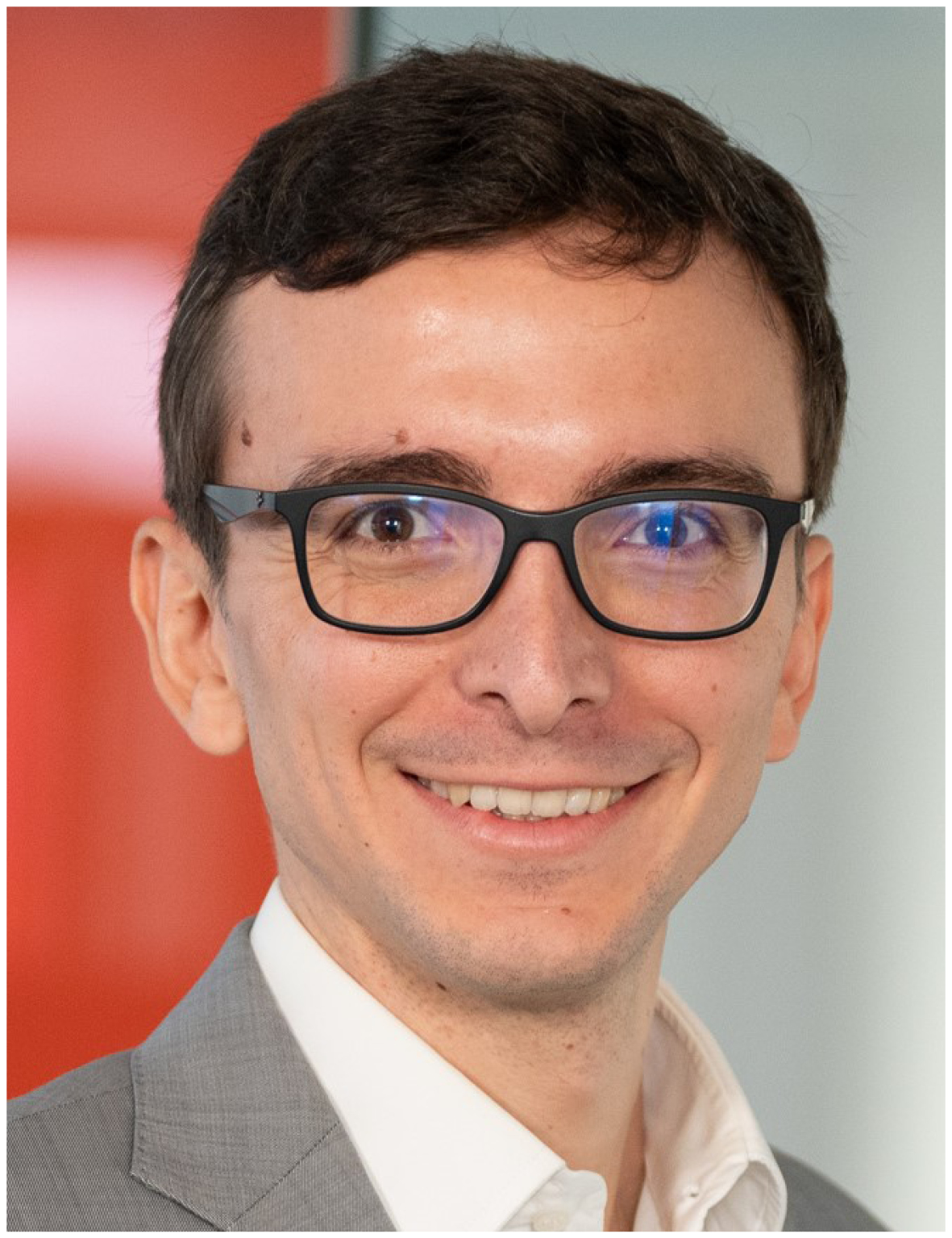
Marco Maggi
Pricing Actuary at la Mobilière and PhD Student in Actuarial Science at the University of Lausanne.
He is a Fully Qualified Actuary of the Swiss Association of Actuaries (SAA) and holds a MSc in Actuarial Science from the University of Lausanne.
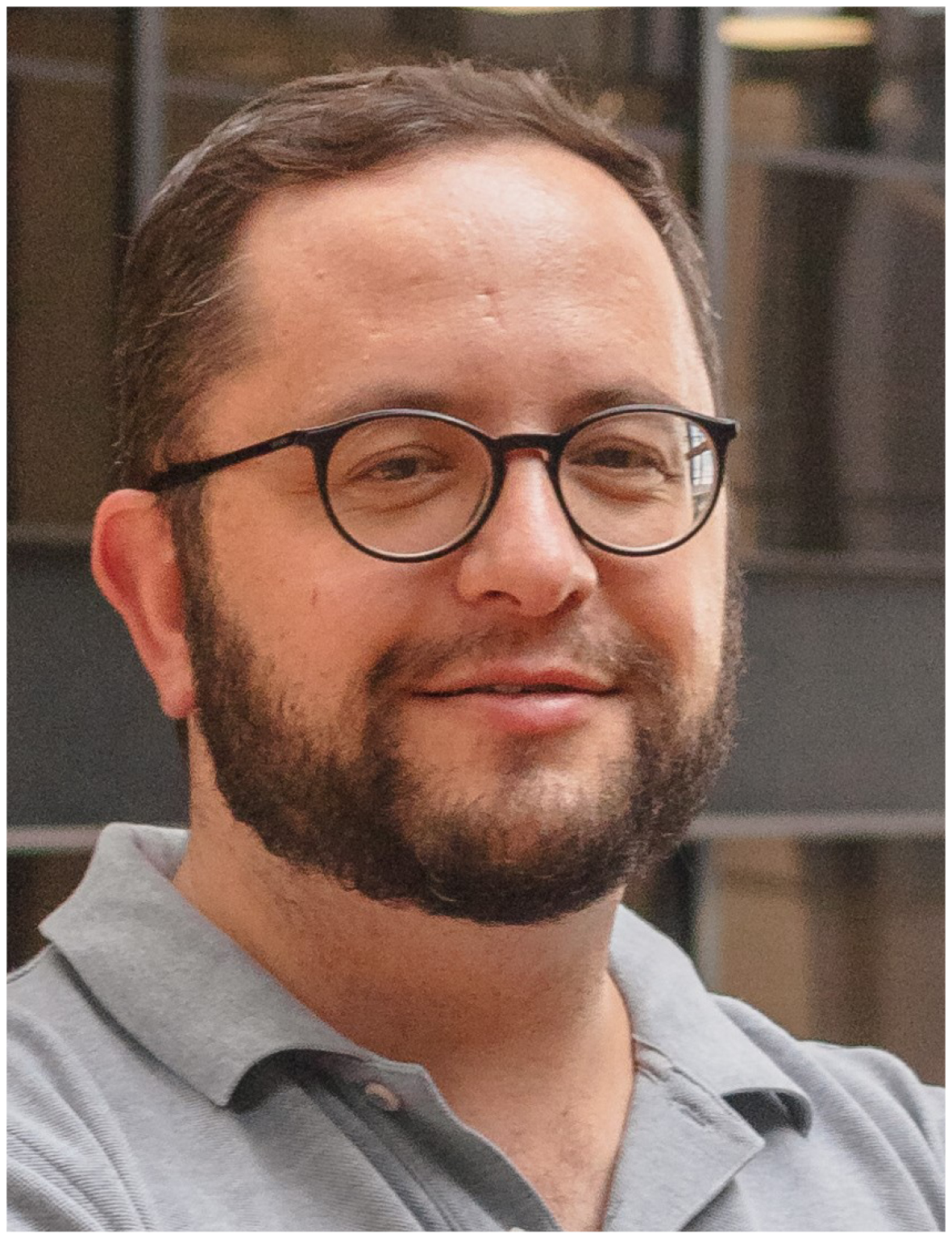
Ronald Richman
Ron Richman is the Founder and CEO of insureAI, a startup focussing on building machine and deep learning tools to improve actuarial processes. Before this, he was Chief Actuary at Old Mutual Insure, South Africa’s second largest P&C group, where he was responsible for oversight of all P&C actuarial activities across Old Mutual. Ron is a Fellow of the Institute and Faculty of Actuaries (IFoA) and the Actuarial Society of South Africa (ASSA), holds practicing certificates in Short Term Insurance and Life Insurance from ASSA, a Masters of Philosophy in Actuarial Science, with distinction, from the University of Cape Town and a PhD in applying deep learning in actuarial science at the University of the Witwatersrand. He is the incoming chair of Actuarial Society of South Africa’s Short Term Insurance Committee.
LOCAL COMMITTEE
Gian Paolo Clemente
Università Cattolica del Sacro Cuore
Francesco Della Corte
Università Cattolica del Sacro Cuore
Alice Pignatelli di Cerchiara
Università Cattolica del Sacro Cuore
Diego Zappa
Università Cattolica del Sacro Cuore
This program is designed for actuaries, data scientists, and professionals in related fields who are interested in enhancing their skills in deep learning and actuarial modeling.
Prerequisites
The participants should have basic knowledge in probability theory, statistics and actuarial modeling. They should be familiar with R and/or Python. Practical experience is an advantage, but not necessary.
From Monday, August 31st, 2026 to Friday, September 4th, 2026.
Università Cattolica del Sacro Cuore
Largo Gemelli 1, 20123 Milan, Italy
For directions, click here
€ 1.700,00
Application deadline July 31st 2026
(After this date, late applications will only be accepted upon confirmation. Please email actuarial.summerschool@unicatt.it to request approval)
Fees include:
• Course materials
• Coffee breaks
• Lunches
